

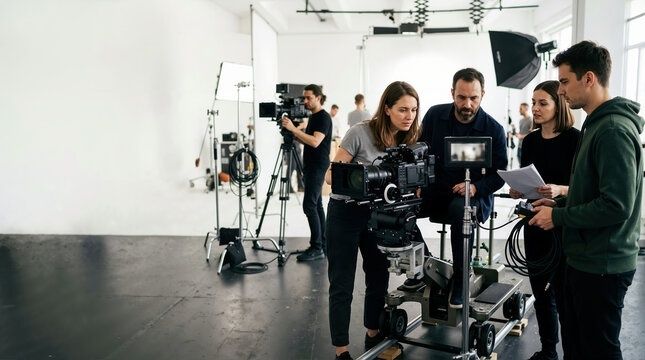
The Unbroken Gaze and the Weight of Real Time
Cinema has always carried a productive contradiction. It appears to preserve the continuity of life, yet it is built from selection, framing, interruption, and arrangement. The cut can compress years into seconds, redirect attention across space, or conceal the instant when one emotional state becomes another. Against this architecture of montage, the unbroken long take makes a different promise. It asks the audience to remain inside a duration that cannot be easily escaped, and to experience time not merely as narrative information but as pressure, uncertainty, waiting, and change.
That promise is an emotional covenant rather than a technical display. A sequence shot may involve elaborate choreography, hidden edits, mobile cameras, and extraordinary coordination, but its significance lies in what such coordination makes possible. When the camera refuses to cut away, the viewer shares the characters’ exposure to space and time. The journey runs from the fixed-frame actuality films of early cinema, whose apparent simplicity concealed a radical encounter with reality, toward contemporary works that use continuous movement to produce dread, intimacy, or existential suspension. The unbroken take matters when its duration becomes a form of knowledge.
Temporal Architecture and the Geometry of the Sequence Shot
A sequence shot is an uninterrupted spatio-temporal unit, a stretch of filmed action presented without a visible cut, splice, or editorial break. The distinction is important. A shot is ordinarily the material between two cuts, while a sequence may contain several shots and changing scales of view. In a sequence shot, however, the action unfolds as one continuous field, usually within a stable location or through connected spaces. The camera can remain still, pan, track, crane, or move alongside performers, but the passage from one moment to the next remains materially present.
The earliest short films often took this form by necessity. Fixed cameras, limited film stock, and single locations restricted what filmmakers could stage, yet those limitations also gave early cinema its peculiar force. The image seemed less like a constructed argument than an event observed in real time. As film language developed, the camera became mobile and the sequence shot became choreographic. Dollies, pans, tracking devices, and, after the invention of the Steadicam in 1976, more intimate movement allowed filmmakers to follow bodies through complex environments without surrendering continuity.
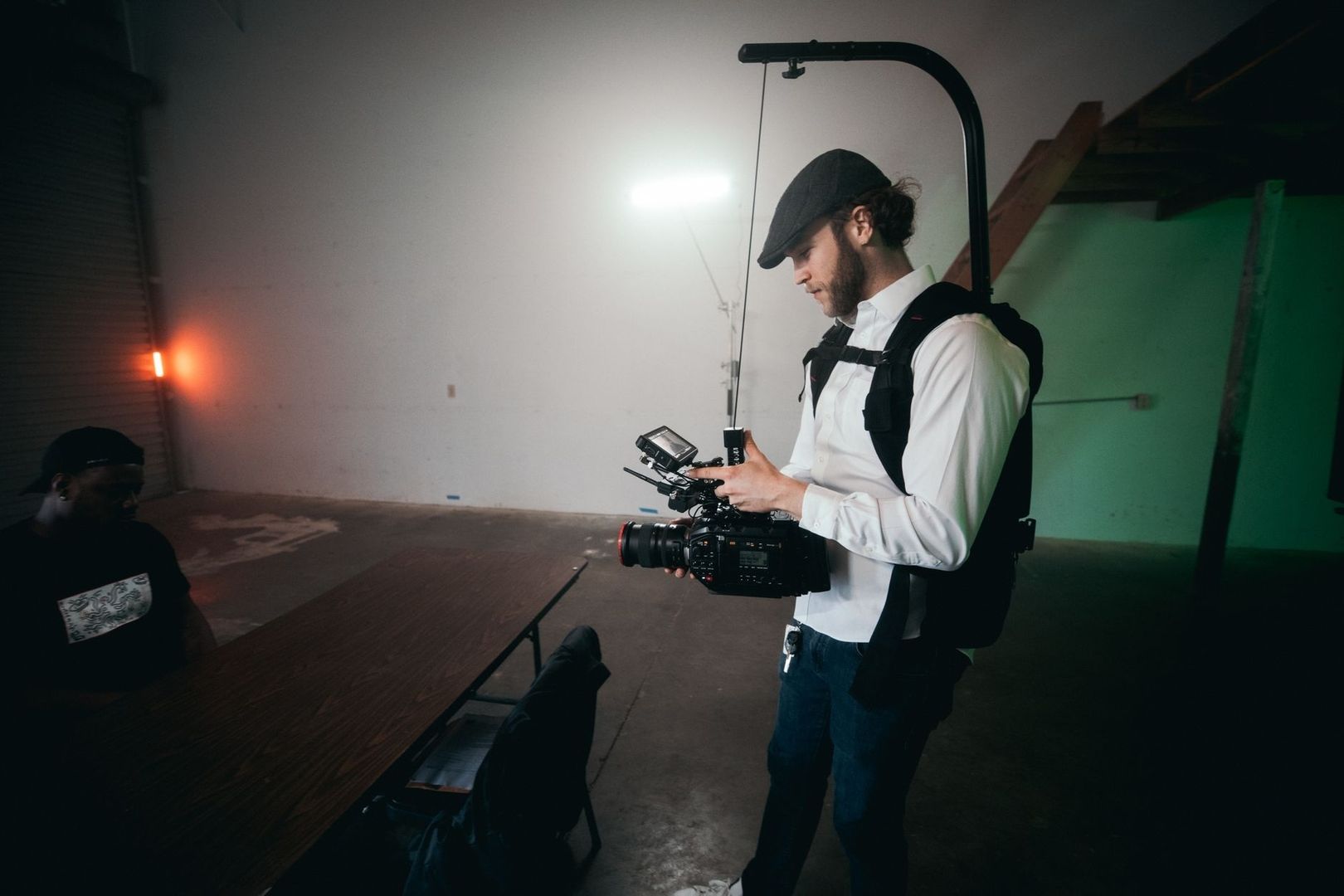
Spatial continuity can preserve a kind of psychological authenticity because it refuses the shortcuts of elliptical editing. A cut can tell the viewer that a character has crossed a room, recovered from an injury, or passed through a moment of hesitation. The continuous take makes those transitions observable. It preserves the awkwardness of movement, the delay before an answer, and the possibility that something just outside the frame may alter the scene. For readers interested in the craft, understanding continuous cinematic staging reveals how camera movement and composition turn duration into a carefully designed dramatic instrument.
- Continuity: Space and time remain connected rather than being reorganized through cuts.
- Choreography: Camera, actors, light, sound, and production design must coordinate within a shared duration.
- Attention: The frame may guide the eye, but it cannot always dictate exactly what the viewer notices.
- Risk: Mistakes, delays, and unforeseen movements become part of the take’s visible vulnerability.
This is why the long take should not be reduced to endurance. Its geometry is expressive. A camera that circles a performer can make a room feel unstable; a camera that follows from behind can turn movement into pursuit; a fixed frame can make stillness feel like entrapment. The absence of a cut does not eliminate form. It makes form operate through distance, duration, obstruction, and the changing relation between bodies and the frame.
Visceral Dread and Somatic Suspense Across Continuous Time
Prolonged real-time duration anchors the viewer inside physical vulnerability. In a conventional suspense scene, editing can create a pattern of concealment and revelation by alternating between a threatened character, a danger, and a possible escape. The long take produces a different kind of tension. It may allow the danger to remain visible, partially visible, or ominously absent while the viewer waits alongside the character. Every second becomes bodily. A corridor must actually be crossed, a door must actually be opened, and a frightened body must remain exposed without the relief of a cut.
This changes the status of spectatorship. The viewer is no longer simply receiving information arranged by an editor. The viewer must endure the duration of looking. When the camera refuses to look away from an impending threat, passive observation becomes a form of participation. The audience scans the frame, anticipates movement, and registers the smallest alteration in sound or posture. The image becomes a shared environment rather than a succession of privileged viewpoints.
Alanna Thain’s Bodies in Suspense describes suspense as an encounter between the body of the film and the body of the viewer. This idea clarifies why a continuous take can feel almost physically demanding. The film has a rhythm, but so does the observer: breathing changes, muscles tighten, attention narrows, and anticipation becomes a bodily condition. Duration does not merely represent suspense. It produces a relation in which cinematic time and human time begin to overlap.
The effect is especially powerful when the camera remains close to a character without granting full control over the environment. A face may fill the frame while danger moves beyond the edges, or a tracking shot may keep pace with someone who has no clear destination. In both cases, the body becomes the measure of uncertainty. The camera’s movement is not only a way to display space; it becomes a register of fear, fatigue, confusion, or determination.
Continuous time also carries ethical implications. A cut can make suffering manageable by turning it into an instant within a larger structure. A long take can deny that comfort, compelling attention toward the duration of vulnerability itself. This does not automatically make an image more truthful, and endurance can become exploitative when the form seeks sensation without insight. The central question is therefore not whether the take is long, but what its length asks the audience to recognize about power, exposure, and the limits of escape.
Existential Release and the Poetics of Lingering Space
Not every long take accelerates suspense. Some use duration to loosen the grip of plot and allow the world to become perceptible in its own right. A frantic tracking shot can make space feel like a machine of pursuit, while a contemplative sequence shot can make space feel open, indifferent, or spiritually charged. In the latter mode, the absence of cuts permits small gestures, pauses, and environmental details to gather meaning. The viewer is not driven toward a single revelation but invited to remain with uncertainty.
François Truffaut’s Les 400 Coups offers one of cinema’s most enduring examples of duration as emotional release and sudden paralysis. The film follows Antoine Doinel, a boy shaped by neglect, institutional authority, and a desperate desire for freedom. In the final movement, Antoine runs toward the coast. The camera follows his flight with a momentum that feels liberating, yet the apparent escape leads to a physical and emotional impasse. The famous final image arrests him at the edge of the sea, and the freeze frame transforms forward motion into an unanswered question.
The power of this sequence lies in its refusal to settle Antoine’s future. As discussed in this account of Truffaut’s humanism, the film’s realism is neither sentimental nor purely bleak. Antoine is not reduced to a social problem. His running body carries fear, intelligence, anger, and the possibility of self-determination. The beach is therefore both destination and threshold. The sequence grants movement, then reveals that freedom is not the same as knowing where one can go.
| Mode of continuous duration | Primary emotional effect | Typical relation to space |
|---|---|---|
| Kinetic tracking | Pursuit, panic, urgency | Space becomes an obstacle or force |
| Observational continuity | Intimacy, uncertainty, social attention | Space preserves relationships among bodies |
| Contemplative stillness | Release, solitude, reflection | Space opens beyond immediate plot |
| Suspended ending | Ambiguity, existential questioning | Space becomes a threshold without resolution |
The comparison between kinetic and contemplative takes reveals that duration has no single emotional meaning. Movement can intensify the sensation of being trapped, while stillness can be more unsettling than pursuit. What matters is the relation between the camera’s tempo and the character’s inner condition. In Les 400 Coups, the run is exhilarating because it breaks the routines imposed on Antoine, but the final halt restores the world’s uncertainty. The sequence does not explain his life. It leaves him, and the audience, in time.
Cognitive Immersion and the Physiology of Uninterrupted Perception
Unbroken visual continuity changes how attention is organized. Montage typically offers strong directional cues: a close-up tells the eye where to look, a reaction shot supplies an emotional interpretation, and a cut connects one detail to another. A mobile long take distributes responsibility differently. The viewer must navigate the frame, track bodies, listen for off-screen information, and decide which detail may become important. Attention remains guided by composition and sound, but it is less completely controlled.
This cognitive demand can deepen immersion because perception resembles an active encounter with an environment. The viewer does not simply decode a sequence of selected images; the viewer searches, predicts, and revises expectations. That process may increase the sensation of presence, although it can also produce fatigue when the frame is too crowded or the camera’s movement lacks dramatic purpose. Continuous flow is therefore not automatically immersive. It becomes immersive when perceptual effort is connected to character, stakes, and spatial meaning.
- Visual tracking: The audience follows moving bodies and changing relationships within a shared frame.
- Predictive attention: Viewers anticipate what may enter the image or emerge from off-screen space.
- Auditory orientation: Sound often directs attention when the camera cannot provide a cut to a decisive detail.
- Memory across duration: Earlier movements and spatial positions remain relevant because the film has not reset the viewer’s perspective.
Research into perception and narrative experience can help explain these effects, but caution is necessary. The referenced scientific literature on continuous visual processing is not, by itself, a universal verdict on every long take, and a browser-accessible article should not be treated as evidence beyond its actual findings. What can be stated with confidence is that sustained visual flow engages attention differently from rapidly edited imagery. The precise emotional result still depends on framing, sound, performance, genre, and the viewer’s own expectations.
For filmmakers, this means that cognitive immersion should serve dramatic comprehension rather than replace it. A long take can make the audience feel lost, but that loss must be expressive. It can reproduce the character’s divided attention, a historical environment’s instability, or the moral difficulty of witnessing. The most successful sequence shots do not merely keep the eye busy. They make the act of looking itself part of the story.
Beyond Virtuosity Toward a Deeper Visual Truth
The difference between hollow showmanship and meaningful continuity is not difficult to locate, even when the technique is spectacular. A technically flawless take may still feel empty if its movement exists only to advertise production difficulty. By contrast, a modestly staged shot can carry enormous emotional weight when its duration corresponds to a character’s vulnerability, a community’s silence, or the historical pressure surrounding an event. Virtuosity matters, but it must answer to perception and human consequence.
The unbroken long take endures because it turns time into an ethical and philosophical material. It can make viewers share another person’s exposure, wait without editorial protection, or confront the uncertainty that narrative usually resolves. From early cinema’s astonishment before moving reality to Truffaut’s image of Antoine suspended between freedom and confinement, continuous duration has preserved cinema’s ability to make presence feel newly strange. Its deepest achievement is not that it proves what a camera can do. It reminds audiences what time feels like when the image respects its weight.