

When the Studio Walls Crumbled into Rubble
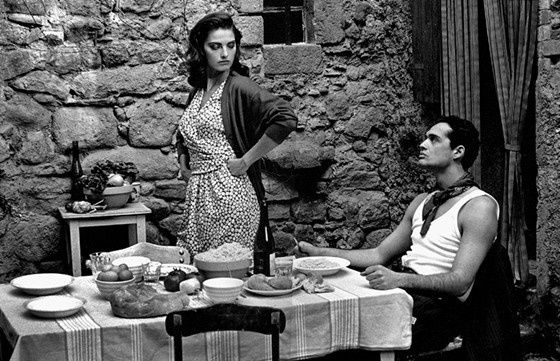
Italian Neorealism emerged from a country physically and morally disfigured by the Second World War. Cities had been bombed, families displaced, infrastructure damaged, and ordinary life reorganized around scarcity. Cinecittà, the vast Rome film complex associated with the controlled glamour of the Fascist era, was damaged and later used for purposes far removed from cinematic fantasy. The studios could no longer provide a reliable shelter for manufactured stories, and the streets outside offered images that no constructed set could equal: broken facades, crowded tenements, military patrols, queues, bicycles, children, and faces marked by exhaustion.
The contrast with Fascist-era escapism was almost unbearable. Under Mussolini, much popular cinema presented an orderly, affluent Italy of elegant apartments, polished manners, and romantic dilemmas detached from poverty and political repression. Once cameras moved into bombed neighborhoods, the distance between screen illusion and lived experience became impossible to maintain. Filmmakers encountered vulnerability not as an abstract theme but as a physical condition visible in clothing, movement, hunger, and silence. The camera became less a machine for beautifying reality than an instrument for witnessing it.
The Rejection of White Telephone Glamour
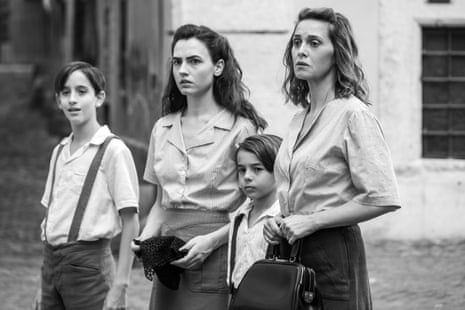
The term Telefono Bianco, or “white telephone,” describes a strand of Italian popular cinema associated with the Fascist period. Its name evokes the conspicuous white telephones displayed in luxurious interiors, objects that signaled modernity, prosperity, and social distinction. These films commonly favored upper-class or comfortably middle-class characters, carefully arranged rooms, fashionable costumes, romantic misunderstandings, and performances shaped by theatrical polish. The interiors were bright, spacious, and reassuring, even when the society beyond the studio walls was marked by inequality and political coercion.
This was not simply an aesthetic preference. The genre helped produce an image of national harmony by directing attention away from class conflict, unemployment, rural hardship, and the pressures of dictatorship. Artificial sets did more than provide visual elegance: they separated cinematic space from historical reality. Stylized acting, orderly plots, and glamorous stars encouraged audiences to inhabit a world in which social friction could be resolved through romance, good manners, or personal virtue. In that sense, the studio itself became a political instrument, transforming exclusion into decoration.
Italian Neorealism did not reject every element of earlier cinema. Rome, Open City, released in 1945, still used established performers, melodramatic structure, religious symbolism, and carefully shaped dramatic tension. Yet Roberto Rossellini combined those familiar devices with location shooting, wartime immediacy, scarce resources, and a visual texture resembling newsreel footage. To understand neorealism”s historical rebellion is to see that its revolution lay not in abandoning narrative altogether, but in forcing narrative to answer to the physical truth of a damaged society.
| Fascist-era studio conventions | Emergent neorealist practice |
|---|---|
| Artificial interiors and controlled visual polish | Actual streets, homes, ruins, and public spaces |
| Affluent or socially protected protagonists | Workers, children, civilians, and displaced families |
| Stylized dialogue and theatrical performance | Unfinished speech, silence, gesture, and regional accents |
| Romantic or escapist resolution | Open-ended situations shaped by economic and political forces |
| Social conflict softened or omitted | Poverty, occupation, unemployment, and moral compromise made visible |
Casting the Street Corner and the Etiquette of Exhaustion
One of the movement”s most powerful discoveries was that a face did not need conventional beauty or professional fluency to command the screen. Non-professional actors carried histories in their bodies. A laborer”s hands, a widow”s guarded posture, a child”s restless gaze, or a man”s hesitation before entering a police station could communicate social knowledge that no line of dialogue could fully explain. Their physical presence made performance feel less like impersonation and more like an encounter between the camera and a life already in progress.
This did not mean that neorealist filmmakers simply pointed a camera at unmediated reality. Casting, framing, editing, and direction remained deliberate acts of construction. What changed was the source of expressive authority. The worn shoe, the poorly fitted coat, the involuntary turn of the head, and the pause before an answer became cinematic language. In such details, trauma appeared indirectly. The body revealed what a character might be unable, or unwilling, to articulate.
Rossellini”s Rome, Open City demonstrates the productive tension between professional acting and documentary immediacy. The film drew on established performers while placing them amid recently liberated Roman streets and conditions shaped by occupation. Its production reportedly depended on scarce materials, improvised resources, and difficult location work, giving the images a rawness associated with wartime reportage. De Sica, by contrast, pursued an even more concentrated study of ordinary urban existence in Bicycle Thieves, where Lamberto Maggiorani”s stiffness and Enzo Staiola”s natural presence create a fragile, uneven emotional texture.
- Posture registers labor, fear, age, and social rank before a character speaks.
- Clothing turns economic hardship into visible narrative information rather than background decoration.
- Gesture allows hesitation, embarrassment, affection, and panic to interrupt formal dramatic rhythm.
- Location places private suffering within a shared geography of streets, markets, workplaces, and queues.
Cesare Zavattini and the Philosophy of the Unexceptional Moment
Cesare Zavattini gave neorealism one of its clearest intellectual foundations. As a journalist and screenwriter, he argued that ordinary existence already contained sufficient drama. Cinema did not need improbable plots, glamorous heroes, or spectacular reversals to justify its attention. The daily struggle to find employment, obtain food, repair an object, preserve dignity, or accompany a child across a city could reveal the structure of an entire society.
This philosophy changed the tempo of storytelling. Instead of rushing toward decisive events, the camera could linger over a purchase, a search, a meal, a delay, or a failed attempt. Such moments might appear uneventful when measured against conventional plot mechanics, yet they acquire tension when survival depends on them. Buying bread becomes an economic calculation. Repairing a bicycle becomes a test of family stability. Waiting becomes a visible form of powerlessness.
Zavattini”s ideas were radical because they treated attention as an ethical choice. To observe a person struggling with a minor task was to insist that this person”s time mattered. The approach also challenged the hierarchy that separated “important” historical events from the lives of those who endured them. War, occupation, and poverty were not only represented through battles or speeches; they appeared in domestic inconveniences, missing wages, crowded rooms, and damaged routines.
- Begin with ordinary lives, allowing working people and families to occupy the center of the narrative.
- Observe rather than over-explain, trusting faces, environments, and behavior to carry social meaning.
- Permit open endings, because structural hardship rarely concludes with a neat dramatic resolution.
- Reduce spectacle, making time, space, and attention available to seemingly minor human actions.
- Connect the personal to the social, showing how private choices are constrained by institutions and material conditions.
The Anatomy of Bicycle Thieves and the Weight of Survival
In Vittorio De Sica”s Bicycle Thieves, Lamberto Maggiorani plays Antonio Ricci, a working man whose newly secured job depends on possession of a bicycle. Maggiorani was a factory worker rather than a conventional film star, and that fact shaped the performance”s unusual force. Antonio does not move through Rome with heroic confidence. He appears anxious, physically contained, and frequently overwhelmed. His body seems to calculate every risk, as though employment, dignity, and family responsibility were balanced on an object that can disappear in seconds.
The stolen bicycle gives the film its immediate plot, but the search matters because it reveals a whole social organism. Antonio and his son Bruno pass through markets, streets, churches, repair shops, restaurants, and working-class neighborhoods. Rome is not a picturesque backdrop. It is an indifferent field of competing needs, where thousands of people pursue their own survival and cannot absorb another family”s crisis. The father”s desperation becomes visible beside the city”s ordinary movement.
The emotional architecture of the film rests on the changing distance between Antonio and Bruno. Their walk is practical, but it is also a lesson in adulthood, shame, and moral compromise. Bruno watches his father search, lie, lose patience, and finally attempt to steal a bicycle himself. The child”s presence does not simply soften the story; it makes every adult action morally legible. What does a father teach when the social order offers no honorable path forward? The answer is never stated directly, but the question remains in every glance between them.
Documentary authenticity transforms a private misfortune into a collective tragedy because the film never treats Antonio”s problem as uniquely personal. Unemployment, insecure labor, theft, hunger, and humiliation are presented as pressures produced by a damaged economy. The crowd that surrounds Antonio is therefore more than scenery. It represents a society in which sympathy exists, but resources do not. For broader historical context, the history of Italian neorealism shows how this fusion of social observation and emotional immediacy reshaped screen storytelling across national borders.
- The bicycle functions as a tool of labor, a promise of independence, and a symbol of fragile economic security.
- Bruno”s gaze converts the father”s crisis into a lesson about dignity and compromise.
- Rome”s crowds make poverty public while remaining largely unable to relieve it.
- The unresolved ending preserves the uncertainty that defines life under structural insecurity.
Carrying the Realist Gaze into Modern Visual Storytelling
The neorealist gaze traveled far beyond postwar Italy. Its location shooting, non-professional performers, open-ended narratives, and attention to working-class life influenced the French New Wave, British kitchen-sink drama, documentary fiction, and later movements in Iran, Latin America, Africa, and South Asia. Filmmakers discovered that a modest camera, an actual neighborhood, and an unpolished face could challenge conventions more deeply than expensive spectacle. Contemporary docufiction continues this inheritance whenever it allows real environments and lived behavior to reshape the planned narrative.
Its lasting power lies in the refusal to protect viewers from vulnerability. Neorealism does not make poverty beautiful, nor does it reduce suffering to a sentimental lesson. Instead, it asks audiences to remain with uncertainty, embarrassment, fatigue, and compromised choices. That demand remains radical because looking closely changes the scale of history. A bombed street is historical evidence, but so is a child”s expression, a worker”s hesitation, or a father”s failed attempt to preserve dignity. Ordinary faces endure as an archive of what official images leave out, reminding cinema that the truth of an era often survives most clearly in the people who were never meant to be seen.