

The Tactile Illusion of the Silver Screen
Cinema is an audiovisual sleight of hand. A figure crosses a room, a coat brushes a doorway, a glass meets a table, and the image acquires physical weight because sound persuades the body that the event has truly occurred. Without that acoustic confirmation, even the most carefully photographed movement can feel strangely weightless, like an image suspended behind glass.
Foley art is the intimate bridge between two-dimensional pictures and embodied human experience. Its purpose is not simply to synchronize noise with movement, but to give gestures a pulse, surfaces a history, and bodies a convincing relationship to space. A successful sound rarely announces its own ingenuity. Instead, it enters the audience”s perception as an unseen layer of psychological reality, allowing fear, tenderness, exhaustion, or menace to register below the level of conscious analysis.
The Anatomy of Invisible Craft and Historic Artistry
The craft is named after Jack Donovan Foley, whose work helped establish the practical methods associated with synchronized sound effects during the transition from live radio performance to talking pictures. In the era before modern post-production libraries, artists had to perform effects in real time while watching the film, often creating several sounds at once. The tradition has changed technologically, but its central principle remains remarkably stable: sound is made through bodily action, attentive listening, and precise timing.
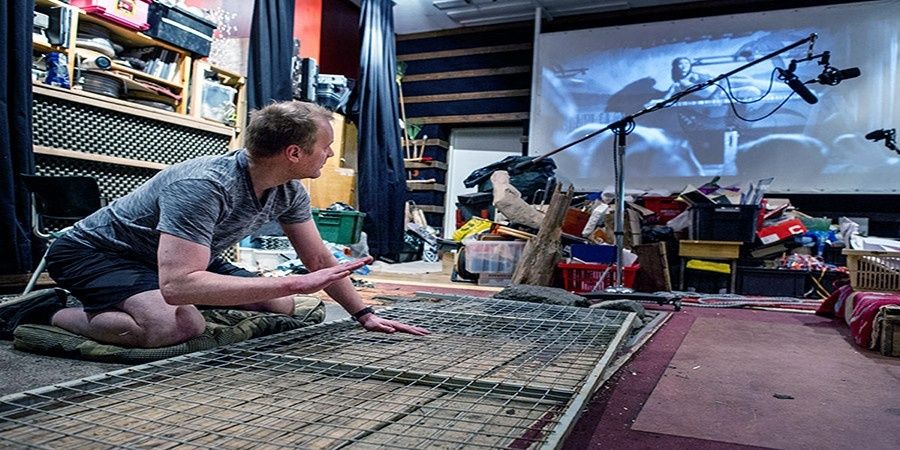
A Foley artist does not merely press a button marked “footstep.” The artist walks in character, matching pace, weight, footwear, posture, and emotional condition. A hurried stride, a hesitant shuffle, and a swaggering entrance may belong to the same pair of shoes, yet each requires a different performance. Jody Thomas, a Foley artist interviewed by the Motion Picture Editors Guild, describes the work as the physical recreation of footsteps and organic sounds produced by characters interacting with objects and surfaces. The emphasis on interaction is crucial. Foley is performance recorded in synchronization with an image, usually on a specialized stage containing multiple surfaces, props, and microphones.
Several sound departments may contribute to a finished soundtrack, but their functions are distinct.
- Dialogue preserves the spoken performance captured during filming, subject to editing and cleanup.
- Field sound effects are recordings made in real locations or environments, such as traffic, wind, machinery, or a room”s natural ambience.
- Automated Dialogue Replacement, commonly called ADR, replaces or supplements production dialogue recorded later in a controlled studio.
- Foley recreates human movement and object interaction in deliberate synchronization with the finished image.
That history and methodology are explored in accessible form through the historical account of Foley sound design. The craft”s continuing artistic status is also reflected by professional institutions such as the Motion Picture Sound Editors, which recognizes Foley alongside dialogue, effects, and music. Foley remains practical work, but practicality should not be mistaken for artistic insignificance. It is a form of acting conducted through pressure, friction, impact, and resonance.
Prop Hunting and the Alchemy of Material Substitutions
Foley begins long before the microphone is switched on. Prop hunting is an exercise in resisting visual logic. The object that looks correct on screen may sound thin, dull, or unusable. A beautifully manufactured sword can produce a lifeless metallic scrape, while a battered piece of salvaged metal may deliver exactly the ringing, unstable resonance a scene requires. Density, age, hollow spaces, surface wear, and the way an object flexes are more important than appearance.
Thrift stores, flea markets, hardware shops, rehearsal rooms, and salvage yards therefore become sonic archives. Foley artists tap, knock, rattle, squeeze, twist, and drag objects through public spaces, listening for a distinctive response. An old wooden chair may contain several sounds: a dry knock, a long creak, a compressed groan, and a loose joint that clicks under pressure. A drum stool found in a rehearsal setting might suggest the timbers of a ship, especially when its movement is transferred onto a metal floor. The object is not imitating one thing by resemblance. It is being transformed through performance and context.
| On-screen action | Possible Foley substitute | Narrative effect |
|---|---|---|
| A character walks across aged wooden boards | Carefully selected wooden flooring performed with period-appropriate footwear | Establishes age, weight, and social environment |
| A heavy door strains open | Layered hinges, timber pressure, and a low structural groan | Creates resistance and anticipates danger |
| Armor or chainmail shifts during movement | Historically suitable metal pieces manipulated against the body | Makes costume feel burdensome and lived in |
| A book opens in a silent room | An old volume with a flexible spine and dry paper movement | Turns reading into an intimate, suspenseful action |
| A body collapses | Layered clothing, controlled impact, and surface-specific contact | Communicates vulnerability without relying on dialogue |
These substitutions are not deceptive in a trivial sense. They reveal cinema”s larger material intelligence. The audience does not need the literal object; it needs an acoustic event that preserves the object”s imagined properties. Foley makes an unseen proposition: this body has mass, this floor can resist it, and this world continues to exist beyond the frame.
Psychoacoustics and the Biology of Somatic Empathy
Tactile sound works because hearing is not confined to the ear. A shoe landing heavily can activate an expectation of muscular effort. Cloth tightening across a shoulder suggests the body beneath it. A fingernail drawn over a surface can produce anticipatory tension before the action has reached its most threatening point. These cues recruit bodily imagination, allowing viewers to simulate, however briefly, the physical condition represented on screen.
This process is closely related to empathy, though it should not be reduced to a simple claim that audiences literally feel everything a character feels. Sound supplies evidence from which the viewer constructs a bodily hypothesis. Is the character moving freely or cautiously? Is the coat protective, restrictive, or soaked with rain? Does the room absorb footsteps, or return them with an accusing echo? Foley gives the nervous system a vocabulary for answering such questions.
- Impacts establish force, vulnerability, and consequence.
- Footsteps reveal intention, fatigue, confidence, or concealment.
- Clothing sounds expose proximity and bodily tension.
- Small object interactions make private actions feel psychologically significant.
- Silence becomes more powerful when the audience has learned what the space normally returns.
Empirical research supports the broader idea that narrative can organize physiological response. In the study “Narrative predicts cardiac synchrony in audiences”, researchers presented the same television episode to separate groups through different sensory formats. One group received visual information with subtitles but no sound; another received audio with description but no visuals. Despite the absence of shared low-level audiovisual features, participants” heart rates showed significant synchrony. Narrative information was approximately ten times more predictive of cardiac response than visual or auditory saliency alone, while immersion was also associated with stronger synchrony.
Foley does not create this alignment by itself, and the study does not isolate Foley as a variable. Its significance lies elsewhere. It demonstrates that audiences process cinematic events as meaningful structures, not merely as collections of sensory stimuli. When footsteps, fabric, impact, and room tone support a character”s situation, sound strengthens the coherence through which narrative becomes bodily experience. Optical viewing becomes somatic attention. The audience is no longer only watching a vulnerable body; it is receiving the pressure, hesitation, and exposure of that body through sound.
Weight and Texture as Narrative Architecture
Corporeality gives cinema a way to represent inner life without translating it into explanation. A character”s footfalls may grow heavier as psychological collapse takes hold, or unexpectedly lighter as a new sense of freedom emerges. Cloth can rasp against a wall like resistance made audible. A chair can complain beneath a body that seems too tired to stand. Such details create an architecture of feeling in which emotion is grounded in the physics of movement.
Todd Phillips”s Joker offers a striking example. Jessica Shine”s analysis of the film”s music and dance argues that Arthur Fleck”s transformation into the Joker becomes physically perceptible through the changing relationship between his body, movement, and sound. At the beginning, Arthur appears gaunt, isolated, and almost spectral. His movements are awkward and irregular, as in the early dance to “Slap That Bass.” Later dances acquire greater confidence and expressivity. Before violence becomes his public language, the body rehearses a different identity through rhythm, posture, and theatrical movement.
The point is not that Foley alone produces Arthur”s metamorphosis. Hildur Guðnadóttir”s score, the compilation soundtrack, Joaquin Phoenix”s performance, framing, editing, and production design all participate. Yet the tactile dimension matters because transformation must be felt as a change in physical organization. Arthur does not merely decide to become someone else. The film shows a body discovering a new tempo, a new balance, and a new relation to space. That corporeal process complicates the character”s controversial appeal, inviting empathy while also exposing the danger of aestheticizing his descent.
- Moral exhaustion can be suggested by delayed movement, soft impacts, and clothing that seems to drag against the body.
- Physical frailty emerges through uneven steps, unstable contact, and the disproportion between effort and result.
- Predatory menace often depends on controlled quietness, deliberate foot placement, and the sudden absence of incidental sound.
- Transcendence may arrive when movement becomes rhythmically coherent, allowing the body to appear newly inhabitable.
At its most sophisticated, sound design serves the story rather than displaying technical virtuosity. Layering, pitch, amplitude, envelope, and psychoacoustic association allow artists to build a character-specific sonic palette. Diegetic and non-diegetic sound can also exchange functions, so that an apparently external musical event begins to feel like an extension of a character”s body. Texture becomes narrative architecture because it organizes how the audience understands presence, agency, and change.
Awakening to the Resonant World Around Us
Foley is cinema”s quietest discipline because its greatest achievement is remaining invisible to conscious attention. When it succeeds, viewers do not congratulate the sound for matching a footstep. They simply accept that the person on screen has arrived, that the floor has answered, and that the object in the hand possesses a particular weight. The art disappears into belief.
That disappearance can also renew attention to ordinary life. After recognizing Foley”s methods, a domestic room becomes acoustically legible: the different complaint of an old hinge, the soft collapse of fabric onto a chair, the hollow response of a cupboard, the altered rhythm of footsteps on tile, carpet, or wood. These sounds are not background clutter. They are evidence of bodies occupying space and of materials retaining memory through wear.
Screen fantasy becomes deeply human when it is allowed to resonate. A fictional body gains dignity, danger, exhaustion, or hope through the sounds of its contact with the world. Foley reminds cinema that emotion is never purely abstract. It arrives through surfaces, pressure, breath, friction, and impact, persuading the audience that even an impossible story has a physical life worth feeling.