

Unearthing the Erased Foot Soldier Behind the Smoke
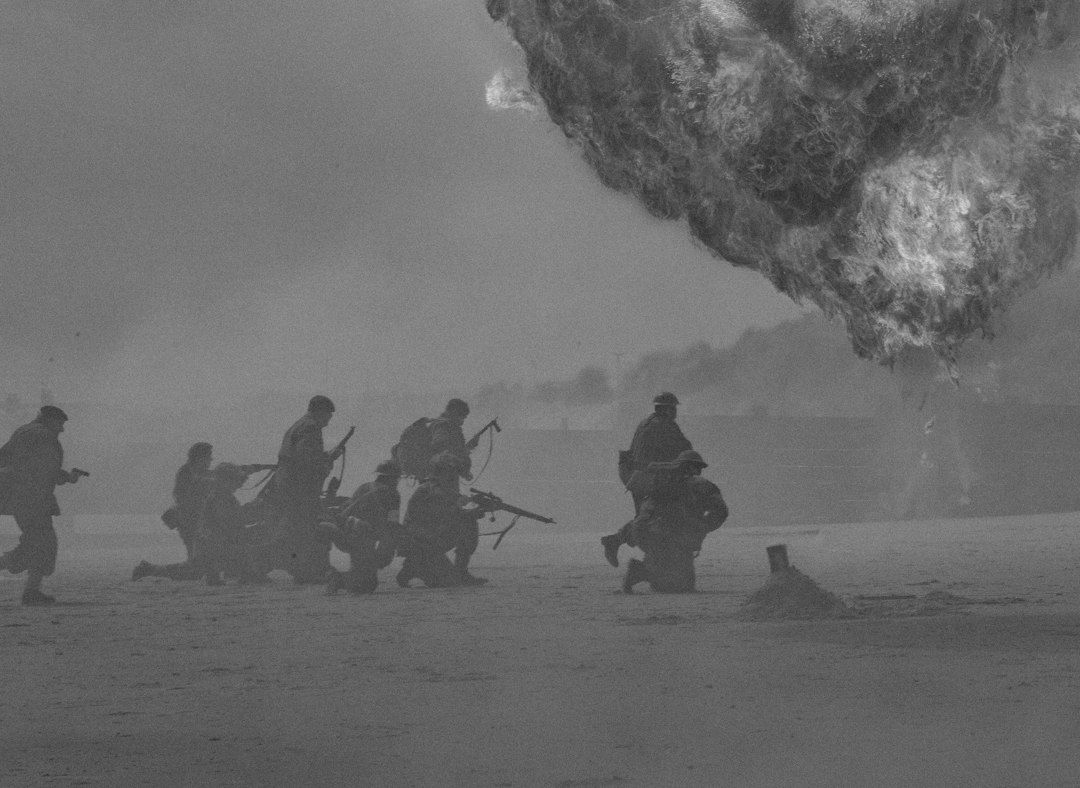
War cinema has long been drawn to the scale of battle: advancing regiments, burning villages, flags rising over ruined cities, and commanders whose decisions seem to organize history itself. Yet the grand war mythology built from these images often pushes colonial soldiers to the edge of the frame. Their bodies may appear in marching formations or crowded battle scenes, but their names, languages, motives, and postwar grievances remain unexplored. The result is a visual history in which empire can recruit, command, and sacrifice minority troops without granting them an equal place in memory.
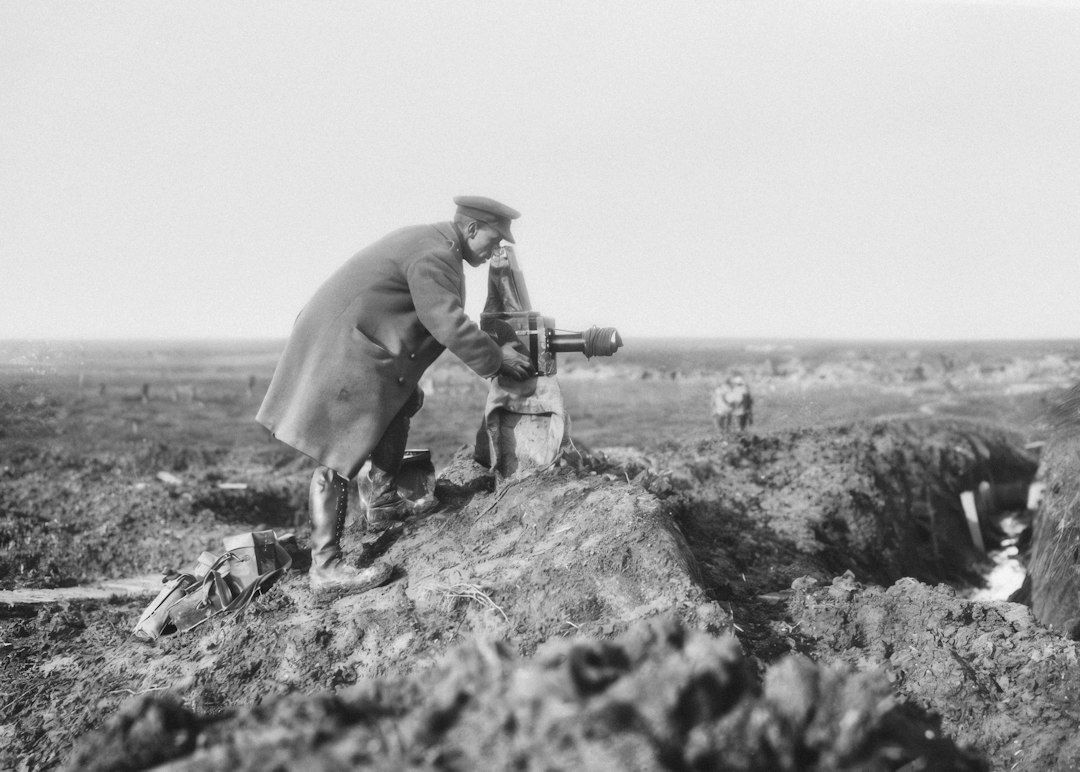
That silence is not the same as an absence of evidence. It is an archival and cultural process, shaped by whose testimony is collected, whose photographs are preserved, and whose suffering is considered central to the national story. Historical combat cinema can interrupt that process by making forgotten experience sensorial again: the pressure of a close-up, the confusion of a battlefield soundscape, the hesitation before an order, or the silence after a comrade falls. In films such as Rachid Bouchareb”s Indigènes, released internationally as Days of Glory, the motion picture camera becomes more than a recording device. It becomes an instrument of restorative historical justice, returning faces and moral agency to soldiers whom official narratives treated as expendable.
The Mechanics of Absence in Traditional War Cinema
Traditional war cinema frequently presents sacrifice through a dominant national perspective. The camera follows the army that controls the narrative, while the political assumptions of that army determine which deaths become meaningful. A European soldier may receive a name, a family photograph, and a final exchange of dialogue, whereas a colonial soldier appears as part of a disciplined mass. This difference is not merely a matter of screen time. It determines who is allowed interiority, who is recognized as a citizen, and whose death can symbolize the nation.
The visual choreography of military cinema can reinforce this hierarchy. Troops are arranged in lines, columns, and geometric formations, turning individuals into coordinated instruments of state power. Minority and colonial soldiers are often seen from a distance, absorbed into the spectacle of movement. Their uniforms make them legible as soldiers, but their personal histories remain opaque. When the film cuts to the officer giving orders, authority becomes individualized; when it returns to the colonial infantry, the group becomes anonymous. What does this framing reveal about power? It shows how cinematic grammar can reproduce the military structure it appears merely to depict.
Film historians therefore need to ask not only what a historical movie includes, but also who produced it, who funded and distributed it, and which audiences shaped its assumptions. Scholarship on Indigenous representation has described a similar burden of historical representation, in which films created by dominant groups portray marginalized peoples without granting them an active voice. Colonial cinema requires the same scrutiny. Scholars researching colonial cinema and postcolonial media frameworks, including Priya Jaikumar, whose work examines film history, spatial politics, and the relationship between cinema and empire in her Directory Profile, highlight how cinematic spaces encode structural exclusions.
- Visibility: Who is placed at the center of the frame, and who remains part of the background?
- Voice: Which characters speak in their own languages, express desires, or challenge official authority?
- Historical ownership: Whose version of the past is presented as objective, and whose testimony is treated as supplementary?
- Afterlife: Does the film acknowledge what happened to veterans after the war, or does recognition end with victory?
Days of Glory and the Architecture of Cinematic Retribution
Days of Glory follows North African soldiers recruited from Algeria and Morocco who serve France during the Second World War. The men travel from North Africa through Italy and France toward the German front, fighting for a country whose ideals of liberty, equality, and fraternity are repeatedly invoked but unevenly applied. Historical accounts cited in discussions of the film indicate that Muslim and Arab soldiers constituted a substantial portion of French forces in southern and eastern France, yet their contributions received inadequate archival recognition. Bouchareb answers that absence by building the film around an ensemble rather than a single heroic commander.
The film”s visual composition gives the Vosges and Italian campaigns a physical harshness that official summaries tend to flatten. Mud, steep terrain, cold, and smoke become part of the historical argument. The soldiers are not decorative evidence of France”s military reach; they are bodies exposed to exhaustion, hunger, fear, and grief. Their different motivations also prevent the story from becoming a simple allegory. Abdelkader seeks dignity and justice within the army. Saïd discovers pride and belonging through service. Messaoud imagines a life shaped by European freedoms, while Yassir”s commitment to soldiering is entwined with personal revenge. These individual arcs reveal how colonial troops could fight for France while also inhabiting radically unequal political realities.
| Official historical emphasis | Bouchareb”s cinematic reorientation |
|---|---|
| Military campaigns and strategic outcomes | Embodied experience of travel, combat, waiting, and loss |
| France as a unified liberating nation | France as an ideal proclaimed amid racial and institutional discrimination |
| Colonial troops as a numerical contribution | Named characters with distinct hopes, conflicts, and moral choices |
| Victory as the endpoint of history | Postwar neglect, frozen pensions, and unresolved citizenship |
The film”s retribution is therefore architectural rather than merely rhetorical. It reconstructs the entire structure through which recognition was withheld. Soldiers encounter unequal treatment, blocked correspondence, and inadequate credit even as they risk their lives. Messaoud”s relationship with a French woman exposes the fragile boundaries of intimacy under colonial rule, while his death transforms private affection into a measure of political exclusion. Abdelkader”s survival after a heroic stand does not deliver uncomplicated triumph. French troops receive public credit for liberation, and the North African veterans remain peripheral to the ceremony of national gratitude. The closing movement, which returns to Alsace decades later, makes clear that the war”s moral accounting was never completed.
Visual Grammars of Trauma and Collective Remembrance
Restorative war cinema changes historical meaning through form. Close-ups refuse the anonymity of the military formation, lingering on faces marked by fatigue, fear, calculation, and mourning. Low angles can grant a soldier dignity, while a cramped interior frame can convey the limits imposed by barracks, rank, and racial hierarchy. The camera does not need to deliver a speech about exploitation when it shows who is permitted to sit, who must wait, and who is denied access to ordinary forms of affection. Small spatial arrangements become evidence of a larger political order.
Sound is equally important. Gunfire, commands, prayer, footsteps, and interrupted conversations create a battlefield that cannot be reduced to maps and dates. A multilingual unit complicates the presumed unity of the national army, reminding viewers that France”s military identity was assembled across colonial borders. Silence can be especially forceful. When a character receives no letter, no public acknowledgment, or no proper memorial, the absence becomes audible. Research on visual consumption, collective memory, and the representation of war, including the study available through figshare.le.ac.uk, points toward the importance of understanding screen culture as a secondary archive, one that can challenge forgotten traumas even when formal records remain incomplete.
This process extends beyond French colonial history. Ousmane Sembene”s Emitaï uses oral tradition, ritual, folklore, and ancestral authority to challenge colonial propaganda and official historiography. Its history is not presented as an untouched record, but as a contested meeting between memory, performance, and political power. Contemporary Lebanese cinema offers another parallel. Films such as Where Do We Go Now?, Tramontane, The Insult, and Memory Box treat the Lebanese Civil War as “the past in the present,” showing how unresolved conflict continues to inhabit identity, family relationships, and physical space.
- The close-up restores individuality to figures treated as a mass.
- The ensemble structure allows different motives and forms of belonging to coexist.
- The multilingual soundscape exposes the layered geography of empire.
- The recurring location connects battlefield experience to the political spaces that shaped it.
- The epilogue tests whether national gratitude survives beyond the moment of victory.
When Projected Light Rewrites State Policy
The political importance of Days of Glory became visible when its representation of colonial veterans entered public debate. The film”s closing text explains that pensions for colonial infantry were frozen in 1959. Although an order for full payment was issued in 2002, the veterans had not received equal treatment for years afterward. By placing this information after intimate stories of loyalty, grief, and sacrifice, the film translated an administrative injustice into a human one. Viewers encountered pension policy not as a technical dispute, but as the continuation of a wartime hierarchy.
The reported legislative shift demonstrates how artistic empathy can become civic pressure. A film cannot by itself settle historical injustice, and cinematic representation should never be confused with legal repair. Yet it can alter the conditions in which policy is discussed. It supplies faces to a statistical category, emotional stakes to a bureaucratic record, and a shared scene of recognition that crosses communities. The screen becomes a public ledger, continually revised when forgotten lives are brought into view.
- Historical cinema identifies an absence in the public narrative.
- Character and performance make that absence emotionally intelligible.
- Audiences connect private suffering to institutional decisions.
- Public attention creates pressure for legal and financial redress.
- Subsequent policy can be judged against the human history the film has made visible.
Reframing the Memorial Screen for Tomorrow
Cinema cannot replace archives, veterans” testimony, or rigorous historical research. Its power lies elsewhere, in making the consequences of archival exclusion felt in the present tense. When a camera gives a name to a colonial soldier, follows his gaze, hears his language, and records the cost of his hope, it challenges the assumption that national history belongs only to the institutions that preserved it. The memorial screen becomes a meeting place between documented fact and lived experience.
For audiences, reading cinematic semiotics deepens historical literacy. The question is not simply whether a film is accurate in its uniforms, battle dates, or military geography. It is also whether its framing distributes dignity, whether its sound allows competing memories to coexist, and whether its ending acknowledges the unequal afterlife of war. Historical cinema remains most necessary when it confronts national myths with human reality. The forgotten soldier does not require a decorative place in an established legend. He requires the legend itself to be rebuilt around the truth of who fought, who was sacrificed, and who was left waiting for recognition.