
The Glowing Artifacts That Anchor Cinematic Reality
A lamp beside a bed, a fluorescent tube above a corridor, a candle trembling on a dining table: practical fixtures are among cinema”s most persuasive objects. Unlike a key light hidden beyond the edge of the frame, a practical belongs visibly to the world of the story. It occupies space, casts believable shadows, reflects in glass, and gives characters something concrete to move past or reach toward. For filmmakers seeking to make atmosphere feel inhabited rather than manufactured, understanding practical lighting in film is essential.
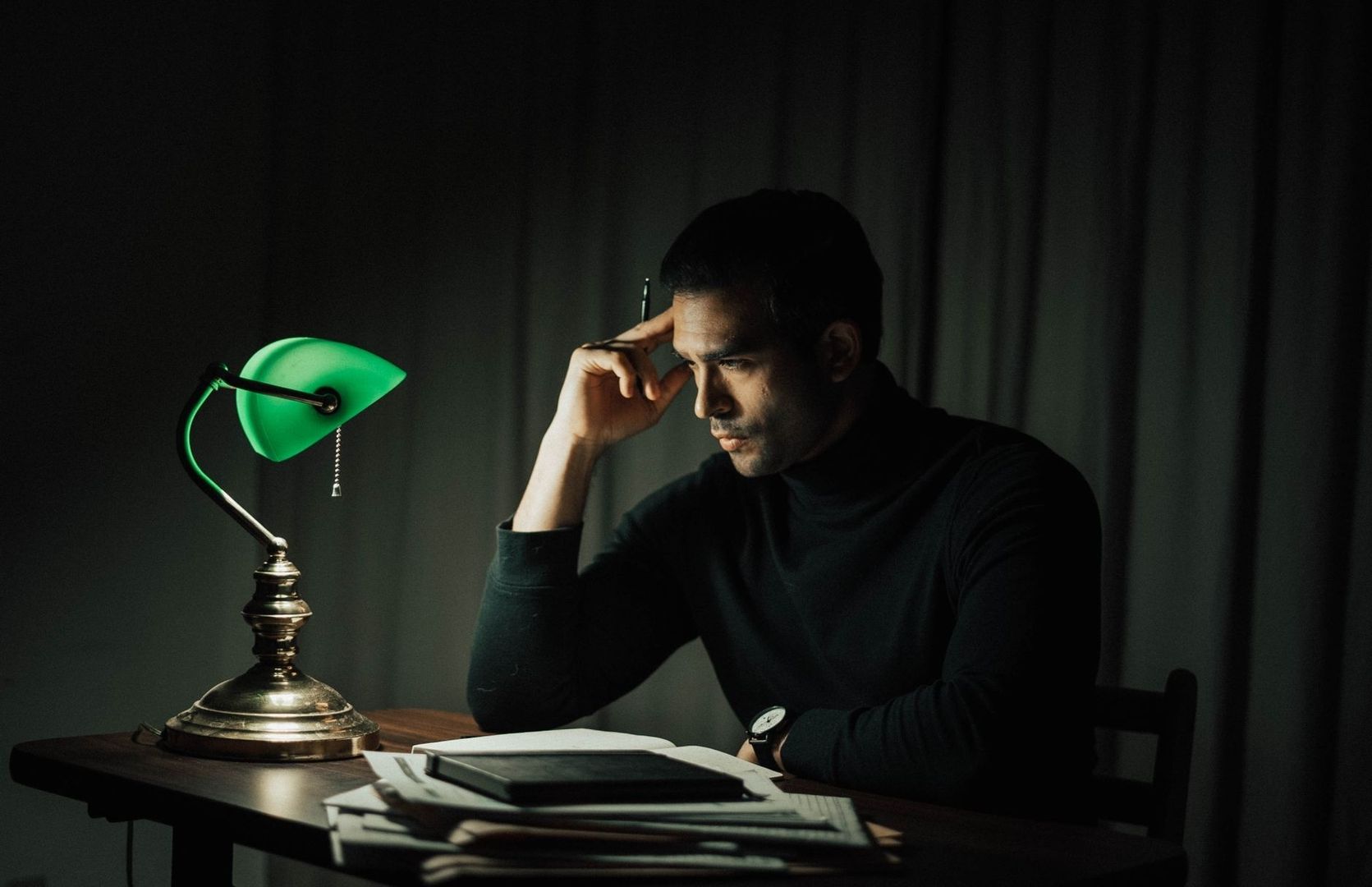
This visibility creates an immediate emotional tether. The viewer does not merely accept that a room is illuminated; the viewer sees why it is illuminated. A bedside lamp can suggest refuge, surveillance, exhaustion, or the fragile persistence of domestic life. A flashlight can turn an ordinary hallway into a field of uncertainty because its beam reveals only what the character is able to find. Diegetic light therefore acts as an active narrative participant. It establishes geography, directs attention, and often discloses the emotional truth that dialogue tries to conceal.
Diegetic Light as Psychological Geography
Diegetic lighting is most powerful when it translates interior states into spatial experience. A character sitting beneath a warm lamp may appear protected, yet the same pool of amber light can become claustrophobic when the surrounding room falls into darkness. A practical does not possess one fixed meaning. Its significance changes according to framing, performance, color, duration, and the character”s relationship to the space. The question is not simply whether a lamp looks attractive, but what kind of world it permits the character to inhabit.
Warm domestic sources traditionally carry associations of intimacy and continuity. Table lamps, candles, and shaded fixtures soften faces and gather bodies into a shared visual zone. By contrast, industrial fluorescents, sodium-vapor streets, and bare work lights often flatten or isolate the human figure. Their harder quality can suggest institutional control, emotional exposure, or the cold logic of a workplace and interrogation room. In confined interiors, this contrast becomes especially potent. A bedroom lit by several small pools can feel cozy in one scene and psychologically divided in another, with each pocket of light marking a separate zone of trust.
The practical source can also orchestrate tension by limiting knowledge. In thrillers and horror films, a flashlight does not merely illuminate a prop; it controls the rhythm of discovery. A character”s movement determines what the audience may see, while the darkness beyond the beam becomes an active force. Roger Deakins”s discussions of small-space lighting emphasize the value of allowing practical sources to create distinct pockets of illumination rather than flooding every surface evenly. That approach preserves shadow as a form of dramatic information.
- A lamp near a character can create emotional shelter or expose private behavior.
- A window source can connect an interior to an unseen social world outside the frame.
- A fluorescent fixture can make institutional space feel impersonal, punitive, or morally ambiguous.
- A candle or flashlight can restrict vision, turning illumination into suspense.
Mastering the Visible Source with Roger Deakins and Modern Cinematography
Roger Deakins”s work demonstrates that a visible source need not be decorative to be beautiful. In Prisoners, lamps, household fixtures, and headlights contribute to an atmosphere in which ordinary American interiors become charged with dread. Discussion of the film”s lighting often turns on a practical question: how can a confined location appear naturally illuminated while still supporting controlled exposure and expressive contrast? The answer is rarely a single visible bulb. More often, the practical establishes the motivation while supplementary light, placed outside the frame, shapes faces and preserves the freedom of camera movement.
This distinction is crucial for students and emerging cinematographers. The fixture seen in the frame may be too bright, too weak, or too small to provide all the illumination required by the camera. It can nevertheless serve as the scene”s visual alibi. A lamp motivates a soft source bounced from a wall; a window permits a controlled beam from outside; a car headlight justifies a stronger directional source entering through glass. The visible fixture is the audience”s explanation, while the hidden augmentation protects exposure, contrast, and performance.
Deakins”s method also reveals why practical lighting is a spatial discipline. A lamp placed behind an actor separates the figure from the background, while a source positioned near the lens can reduce modeling and flatten the image. Small changes in height, shade, bulb wattage, and distance alter the emotional geography of a room. The following examples show how the same broad categories of fixtures can be used toward very different dramatic ends.
| Visible fixture | Technical character | Emotional register | Typical dramatic use |
|---|---|---|---|
| Desk lamp | Localized, controllable pool of light | Intimacy, concentration, secrecy | Confessions, investigation, solitary work |
| Bare bulb | Harder source with pronounced falloff | Exposure, vulnerability, moral tension | Interrogation, poverty, unstable domestic spaces |
| Fluorescent tube | Broad, cool illumination with institutional texture | Alienation, bureaucracy, emotional fatigue | Hospitals, offices, corridors, detention spaces |
| Candle or oil lamp | Low-level, warm, visibly flickering light | Memory, fragility, ritual, longing | Historical drama, mourning, private remembrance |
| Headlights | Directional, powerful beams entering from outside | Threat, arrival, disruption | Night exteriors, confrontations, sudden revelation |
| Neon sign | Colored, intermittent or reflected illumination | Desire, fracture, urban isolation | Noir, nightlife, psychological dislocation |
Color Temperature and Texture from Noir Shadows to CineStill Halation
Film noir established the expressive authority of practical light through sharp pools, Venetian-blind shadows, silhouettes, and high-contrast interiors. Its visual language was shaped partly by technological and industrial conditions, but it became a moral grammar. Faces disappeared into darkness, streets were divided by hard beams, and a lamp could seem less like a domestic object than an instrument of judgment. Noir”s limited fill made space feel unstable, suggesting that the truth was always present but never fully available.
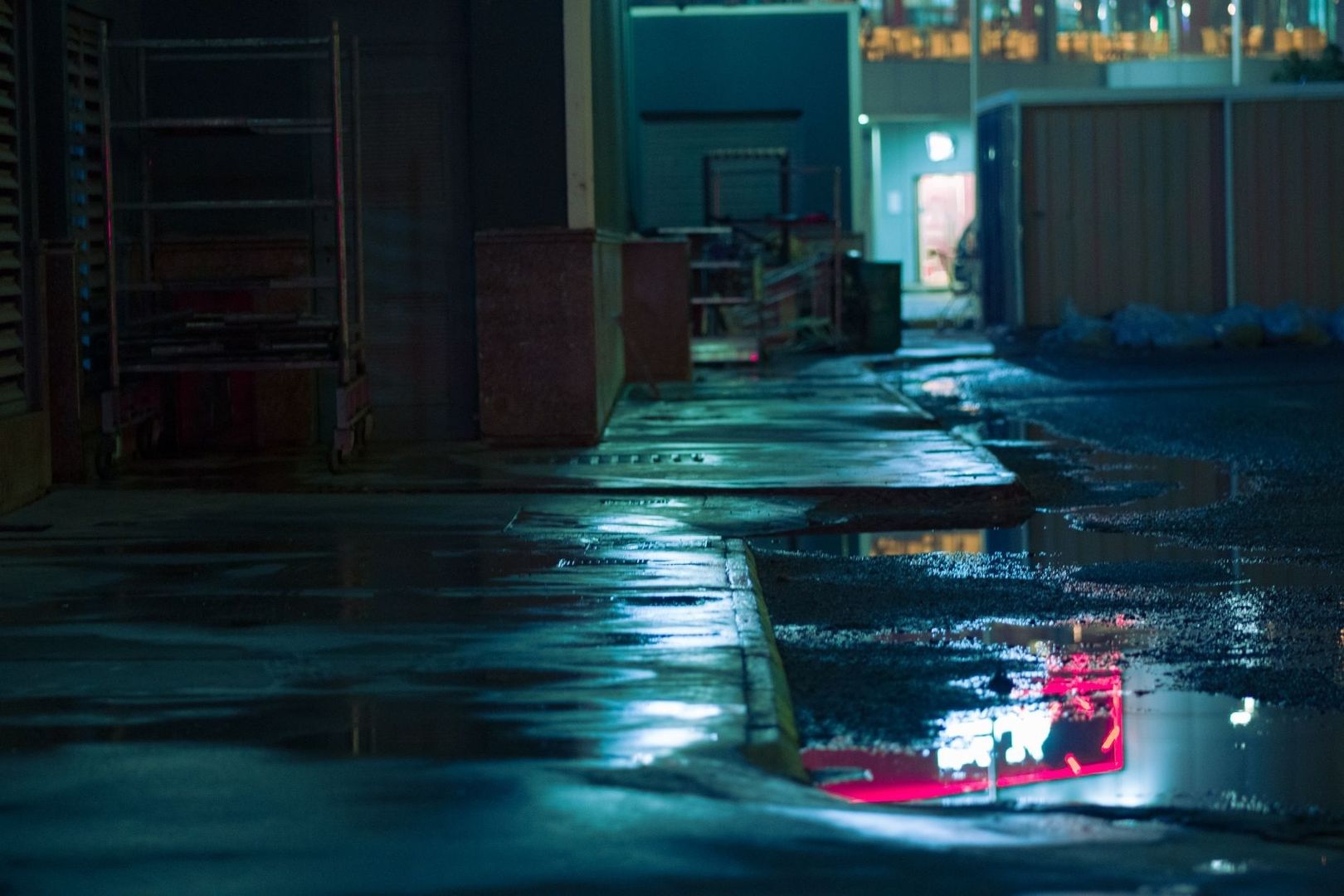
Modern cinematography has expanded that vocabulary through color. Tungsten warmth against cool neon can divide a character from a city, a memory from the present, or one ethical position from another. A warm lamp in a blue room may preserve the illusion of home while revealing that the character is emotionally exiled from it. Conversely, a cool screen or fluorescent source intruding into a warm domestic setting can introduce narrative stakes without any change in dialogue. Color temperature becomes a form of dramatic editing within the shot.
Texture adds another layer. CineStill 800T, derived from Kodak Vision3 500T motion-picture film and adapted for still photography, is known for red-orange halation around exposed light sources. The effect occurs because light can pass through the emulsion, reflect from the film base, and re-expose the emulsion from behind, producing a glow that feels tactile rather than digitally clean. In night photography, neon, headlights, and practical bulbs acquire a dreamlike fringe. Halation can evoke memory, intoxication, romance, or sensory overload, though it is most effective when its presence is motivated by the story”s visual world.
- Use warm tungsten sources to suggest enclosure, memory, or bodily closeness.
- Use cool neon and fluorescent light to create distance, instability, or urban pressure.
- Reserve extreme color contrast for moments when the narrative itself is divided.
- Treat halation as texture with emotional consequences, not as an automatic style effect.
Low-Budget Craft and the Art of Strategic Modification
Practical lighting is particularly valuable on small productions because it turns limitation into a visual principle. A household lamp can become a motivated key, a background accent, or a compositional anchor. The goal is not to reproduce the scale of a studio rig, but to control what the audience sees and believes. One carefully shaped source often produces a more coherent image than a room crowded with unrelated lights.
Safety and exposure must remain central. Household fixtures may overheat, bulbs may exceed a lamp”s rating, and improvised fabric can ignite. Low-heat LED bulbs, properly rated dimmers, fire-resistant materials, and secure cable management are practical necessities, not optional refinements. Diffusion should never be placed directly against a hot bulb unless the material is designed for that use. The most convincing low-budget image is one created through restraint, preparation, and respect for the physical equipment.
A small interior sequence can be approached methodically. Start by identifying the emotional center of the scene, then decide which practical source belongs to that center. Test the camera”s exposure at the intended aperture and ISO, examine the brightest part of the bulb and the darkest skin tones, and add hidden support only where the image requires it. The following process preserves both narrative focus and technical integrity.
- Choose one dominant practical and establish its story function. Decide whether it represents comfort, surveillance, work, absence, or threat.
- Control intensity with a compatible dimmer or a lower-output bulb. Test for flicker at the chosen frame rate and shutter angle.
- Soften or redirect the source by bouncing light from a pale wall or ceiling. Avoid direct, unshaped illumination when a more natural falloff is possible.
- Use diffusion and black wrap carefully. Diffusion can enlarge the apparent source, while black material can block spill and keep the background from competing with the subject.
- Add negative fill on the shadow side when the room looks too flat. A dark cloth or flag can deepen contrast without introducing another visible fixture.
- Check continuity from every planned camera angle. A practical that works in a close-up may flare, disappear, or overexpose the frame in a wider shot.
Looking Beyond the Bulb to Find the Story
Practical lighting joins technical cinematography to narrative empathy. It explains where illumination comes from, but it also asks how a character experiences a place. A lamp can create a sanctuary that is already beginning to fail. A hallway fixture can make institutional power visible. Headlights can arrive before a person does, announcing danger through light alone. These sources give the audience a physical route into emotional states that might otherwise remain abstract.
For filmmakers and cinephiles, close attention to visible light reveals how much storytelling happens before a line is spoken. Watch where a character stands in relation to a lamp, which face remains outside the pool, and whether a source flickers, blooms, hardens, or fades. Imperfect light carries the traces of lived environments: dust, glass, aging bulbs, uneven walls, and the limits of human control. What remains compelling is not the bulb by itself, but the unspoken truth it makes possible to see.